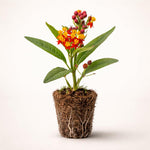
Orange Tropical Milkweed (Asclepias curassavica) 2-Pack Live Starter Plugs Outdoor, 6in
$24.99
Unit price perPrice is for a 2-pack. You will receive 2 plants of the same variety
Ships within 3 business days. Free shipping on orders of $49.99 or more.
Color:
Sunlight Exposure: Full sun
USDA Hardiness Zone: 8 to 11
Expected Plant Height: 3 to 6 feet
Moisture Needs: Moderate
Product Dimensions:
Meet Orange Tropical Milkweed: the classic form of Asclepias curassavica, with clusters of vivid orange-red and yellow flowers for months, and a reliable host plant for monarch caterpillars.
WHAT ARRIVES
2 live starter plugs, each approximately 6 inches tall. Because these are living plants, size can vary slightly from one plug to the next.
IMPORTANT SAFETY NOTE
The ASPCA lists milkweed as toxic to dogs, cats and horses. It contains cardiac glycosides, which can cause vomiting, diarrhea and weakness if eaten, and more serious effects in large amounts. The milky sap irritates skin and eyes, so wear gloves when handling or pruning, and keep it out of reach of pets, livestock and children.
WHERE IT SHINES
Butterfly and pollinator gardens, sunny borders and large containers. Monarch caterpillars feed on the leaves, so chewed foliage means it's doing its job.
GROWING IT
Plant in full sun. Water regularly while it establishes, then moderately; it's fairly drought tolerant once rooted. Space plants about 16 to 20 inches apart. It grows upright and semi-bushy to about 2.5 to 3 feet tall. Deadhead to keep it blooming.
CLIMATE
A short-lived perennial in USDA zones 9 to 11, and it may regrow from the base after frost in zone 8b. Elsewhere, grow it as a summer annual or overwinter potted plants indoors.
WHAT TO EXPECT
In frost-free climates, tropical milkweed that stays green all winter can encourage monarchs to breed year-round instead of migrating, which conservation groups link to higher rates of the OE parasite. In warm-winter areas, cut it back hard in late fall and winter.
Questions about your order? Message us — we are the people who grew it.